
Nov 21, 2026 · Haroon Ali
How can you improve batting in cricket? To improve batting in cricket, start with a balanced stance and a relaxed grip, move your feet to the ball, watch it closely to time it, and choose shots that suit each delivery. Practise simple drills three or four times a week, review your mistakes on video, and work on one weakness at a time instead of trying to hit every ball hard. Even 30 to 45 minutes of focused practice can build better habits.
Written by Haroon Ali, Cricket Writer at Everything About Cricket.
You can find plenty of cricket batting tips online, but a list of ideas is not the same as a practice method. For each of the 12 tips below, you get what the technique means, how to practise it, a simple example and one common mistake to avoid.
This guide suits beginner and intermediate players in hard-ball, tennis-ball and tape ball cricket. You do not need an academy or expensive kit to start. A bat, a ball, some safe space and the patience to fix small faults are enough.
The advice here is general coaching guidance. If you need correction for your own technique, ask a qualified cricket coach to watch you bat. New to the game? Our guides to T20, ODI and Test cricket explain how each format changes what a batter needs.
How to Improve Batting in Cricket: 12 Practical Tips
1. Learn the Correct Cricket Batting Stance
Your stance is the position you take before the ball is bowled, and every shot starts from it. Stand with your feet about shoulder-width apart, knees slightly bent, weight even and head turned so both eyes face the bowler.
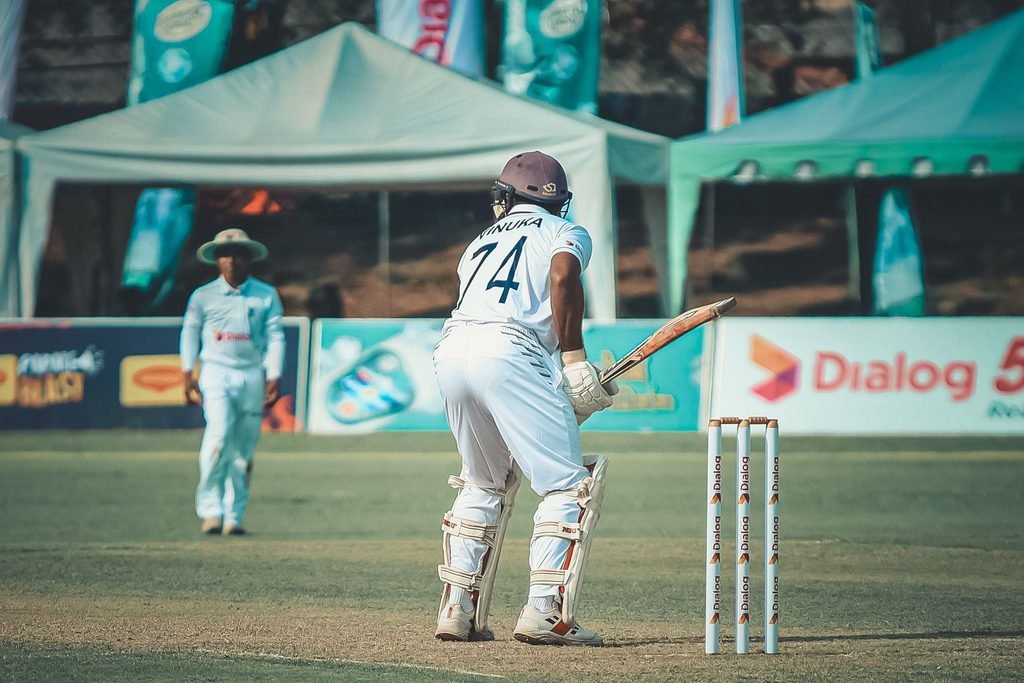
Practise it: Take your stance in front of a mirror and hold it for 20 seconds. Step your front foot forward, return, then step your back foot back and return. Repeat 10 times.
Example: If you can step to a full ball or a short ball without your head dropping, your stance is working.
Common mistake: Standing stiff with locked knees. Soften your knees and relax your shoulders. Keep your backlift simple and straight too. In a survey of 161 coaches, 83% said they coach a straight backlift.
2. Use the Proper Cricket Bat Grip
Your grip controls the bat face, so it decides where the ball goes. A right-hander puts the left hand on top (reverse this for left-handers), keeps both hands close together and lines up the “V” of each hand with the splice on the back of the bat. Hold the handle firmly enough to stop it twisting and loosely enough to keep your wrists free.
Practise it: Shadow-bat 20 defensive shots and 20 straight drives with a loose grip. Then play 10 of each with a tight grip and notice how stiff your wrists feel.
Example: Relaxed hands let the bat swing straight through the line, while tight hands push it across.
Common mistake: Squeezing the handle all the time. Loosen your fingers between deliveries.
3. Improve Your Batting Footwork
Footwork gets your body to the ball so your hands only have to guide it. Go forward to full balls, go back to short balls, and avoid staying in between.
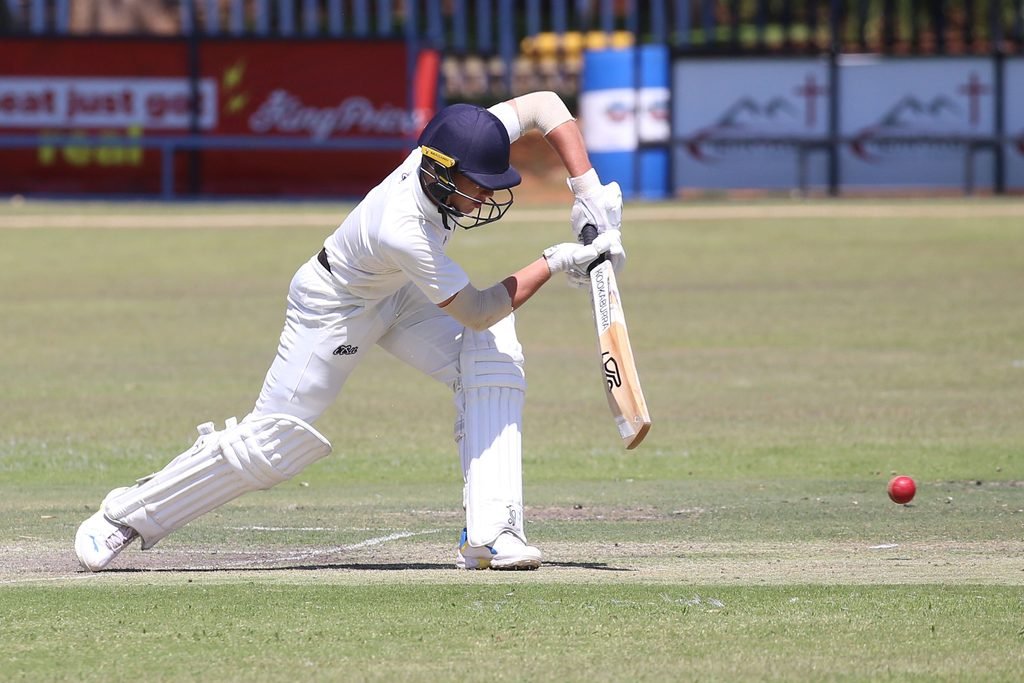
Practise it: Place two cones on the ground, one where your front foot lands and one for your back foot. A partner calls “front” or “back” at random. Step to the right cone and play a shadow shot. Do 10 calls per set and three sets.
Example: A full ball outside off stump asks for a front-foot stride with your head over your front knee. A short ball asks for a step back and across.
Common mistake: Leaning at the ball without moving your feet. Decide front foot or back foot before the ball bounces.
4. Focus on Timing Instead of Only Power
Timing means meeting the ball at the right moment with your body balanced. A clean, balanced hit usually travels further than a rushed heave, so watch the ball from the bowler’s hand to your bat and play it late.
Practise it: Hold a ball at shoulder height, drop it in front of you and hit it after the bounce with a straight bat. Do 30 repetitions. Then ask a partner to feed underarm balls from 5 metres.
Example: A half-volley pushed down the ground with an easy swing is a good timing shot, because the ball does the work.
Common mistake: Swinging early because you want a big hit. Wait, let the ball come to you and finish with a still head.
5. Practise Basic Cricket Shots
Learn five shots first, because they cover most deliveries you will face. Use this table as a guide:
| Shot | Best against | Key cue |
|---|---|---|
| Forward defence | Good-length or difficult balls | Straight bat, soft hands, head over the ball |
| Straight drive | Full ball on the stumps | Front foot to the pitch, balanced finish |
| Cover drive | Full ball outside off stump | Same base as the straight drive, no reaching |
| Pull shot | Short ball at the body | Back foot, roll the wrists to keep it down |
| Cut shot | Short, wide ball outside off | Back and across, high elbow |
Practise it: Shadow-bat 10 repetitions of each shot, then repeat each one against drop feeds.
Example: Treat the straight drive as your first attacking shot, because it uses the straightest bat path.
Common mistake: Playing the cover drive at every ball outside off stump. Match the shot to the length.
6. Improve Your Technique Against Fast Bowling
Against pace, survive first and score second. Stay still, play late and close to your body, leave wide balls alone and decide how you will handle the short ball before it arrives.
Practise it: Move up one step at a time: underarm feeds from 8 metres, then overarm throwdowns at moderate pace, then tennis-ball bowling, then hard-ball or bowling-machine practice with a coach.
Example: In your first 10 balls, play straight and leave anything wide.
Common mistake: Deciding on a hook or pull too early. Choose between ducking, swaying or pulling as the ball is released.
Safety: With a hard ball, wear a helmet, pads, gloves, a box and a thigh pad. Use a bowling machine only with supervision.
7. Learn to Play Spin Bowling
Spin asks you to commit. Read the length early, then go fully forward to the pitch of the ball or fully back, and avoid pushing half-forward. Watch the bowler’s hand and the flight of the ball.
Practise it: A partner throws 30 underarm balls with a little spin from 6 metres, mixing full and short. Call “full” or “short” before each bounce, then commit to a forward stride or a back-foot step.
Example: A fuller ball invites a forward stride, and a shorter ball asks you to get right back in the crease.
Common mistake: Playing across the line against the turn. Play straight first and rotate the strike with singles.
8. Practise Cricket Batting at Home
Home practice keeps your technique sharp when you have no ground or bowler. The minimum kit is a bat, a tennis or soft ball, a mirror or phone camera, and either a safe wall or two cones.
Practise it: Shadow-bat 30 repetitions, hit a soft ball against a safe wall for three sets of 20, then do three sets of cone footwork. Record one session a week.
Example: A 25-minute session could be 5 minutes of warm-up, 10 minutes of shadow batting and 10 minutes of wall work.
Common mistake: Using a hard ball near windows or people. Use a soft ball and clear your space first.
9. Improve Your Shot Selection
Shot selection means choosing the shot the ball asks for. Check the length first, the line second and the field third.
Practise it: A partner feeds 30 balls of mixed length. Call the length before the ball bounces, then play the matching shot or leave it.
Example: A full, straight ball suits a drive. A short ball at your body asks for a pull or a duck. A wide ball you cannot reach is a leave, so check what counts as a wide in our cricket rules guide.
Common mistake: Attacking every ball to score quickly. Accept a dot ball when the delivery does not suit your shot, and look for singles and twos.
10. Build Confidence and Concentration
Confidence means trusting your preparation, and concentration means staying with one ball at a time. A simple routine between deliveries gives your mind a reset button.
Practise it: Play the survival game. Face 18 balls with three lives and lose one for every miss, edge or poor shot. Try to finish with at least one life left. Between balls, step away, breathe, look at the field and take guard.
Example: After a boundary or a poor shot, run the same routine, so the next ball gets your full attention.
Common mistake: Replaying the last shot in your head. Park it and focus on the next delivery.
11. Develop Power Without Losing Control
Power comes from balance, timing and a stable base, supported by strong legs, hips and core. If you want to know how to hit powerful shots in cricket, start with clean contact and add bat speed gradually.
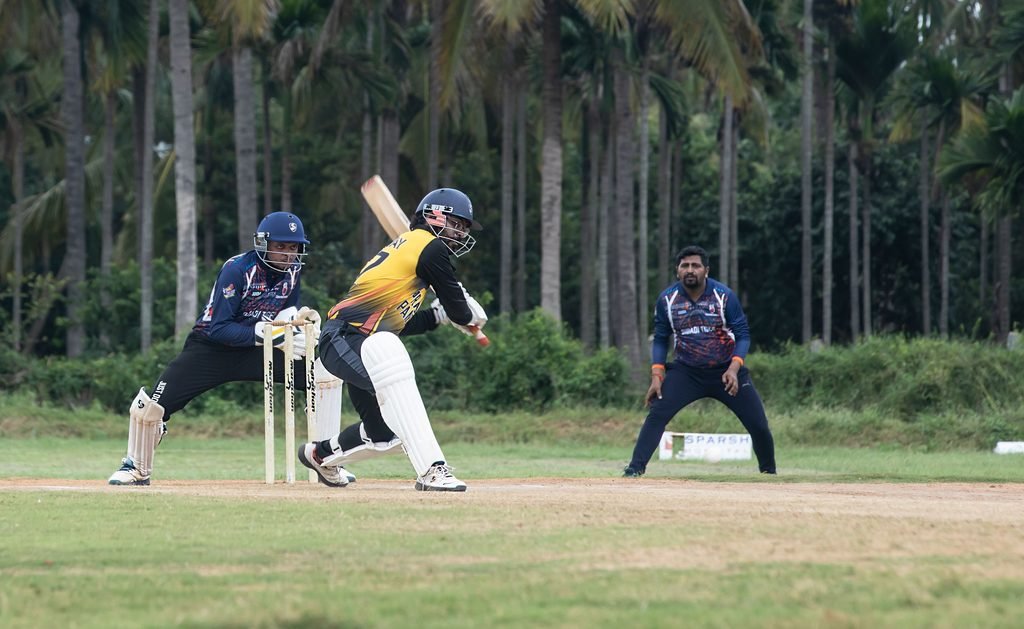
Practise it: Ask a partner for gentle throws into your hitting area. Play controlled straight drives, then increase bat speed only while your finish stays balanced. Add two short bodyweight sessions a week with squats, lunges and planks.
Example: A batter who stays balanced and meets the ball cleanly can clear the rope with less effort than one who swings off-balance. For a tape ball version of this idea, see our guide on how to hit sixes in tape ball cricket.
Common mistake: Swinging harder while your head falls away. Keep your head still and hit through the ball.
12. Follow a Consistent Batting Practice Routine
Regular, focused sessions beat random hitting. Choose one or two skills before each session and track your progress.
Practise it: After every session, write down the balls you faced, clean contacts, your main mistake and one focus for next time. Film one session each week and compare it with the week before.
Example: Work on footwork on Monday and timing on Wednesday. Use the 7-day plan below as a starting point.
Common mistake: Practising without a target. Decide what you are fixing before you pick up the bat.
Best Cricket Batting Drills for Beginners
These batting drills for beginners need very little equipment. Start with the solo drills, add a partner once you feel balanced, and use a bowling machine only with a coach.
| Drill | Equipment | Alone, partner or machine | Dose | Safety note |
|---|---|---|---|---|
| Shadow batting | Bat, clear floor space | Alone | 30 reps per shot | Check overhead and side clearance |
| Mirror or phone video | Mirror or phone | Alone | 10 minutes | None needed |
| Wall rebound | Soft ball, safe wall | Alone | 3 sets of 20 | Keep away from windows and people |
| Drop-ball hitting | Bat, ball | Alone or partner | 30 hits | Use a soft ball indoors |
| Hanging ball or batting tee | Ball in a sock or net, or a tee | Alone | 5 minutes per shot | Set up away from passers-by |
| Throwdowns | Tennis ball, optional stumps | Partner | 30 balls | Partner throws from a safe distance |
| Bowling machine | Machine, helmet, pads, gloves, box, thigh pad | Machine, with a coach | Short sets, slow speed first | Supervised sessions only |
Safety rules for every drill:
- Beginners should start with a tennis or soft ball, not a hard ball.
- Wear full protective gear whenever you use a hard ball.
- Warm up for 5 to 10 minutes first, and stop if you feel pain.
- Ask a qualified coach for individual feedback when you are stuck on one fault.
How to Improve Batting in Cricket During Real Matches
Practice feels calm, but a match adds a scoreboard, fielders and bowling changes. These habits help you carry your skills across.
- Read the conditions. Watch the pace and bounce of the pitch and what the bowler is trying to do before you take risks.
- Find the gaps. Look at the field after every over and aim for open areas to score singles and twos.
- Call clearly. Use “yes”, “no” or “wait” early and loudly, and look at the fielder when you decide.
- Respect the situation. Overs left, wickets in hand and the required run rate decide how much risk you can take.
- Review after you get out. Ask whether it was shot selection, footwork or a good ball, and fix one thing.
Format changes the plan too. Our T20 blogs, ODI blogs and Test blogs cover each format. For real-match context, read our report on Fakhar Zaman’s century against Sri Lanka or Virat Kohli’s 74 against New Zealand.
Common Batting Mistakes and How to Fix Them
The tips above each name one fault. These are the wider habits that hold batters back, even those who have played for years.
| Mistake | Why it hurts | Fix |
|---|---|---|
| Practising only your favourite shots | Weak areas stay weak | Spend half of each session on your weakest shot |
| Skipping the warm-up | Stiff movement and a higher injury risk | Do 5 to 10 minutes of jogging, arm circles and hip and shoulder mobility |
| Ignoring defence | You cannot survive tough spells | Practise forward and back-foot defence in every session |
| Poor calling between the wickets | Run-outs and lost partnerships | Call “yes”, “no” or “wait” early and clearly |
| Never watching yourself on video | Faults stay hidden | Film one session a week and compare |
| Changing technique after one failure | You never become consistent | Give a change several sessions before you judge it |
| Copying a star player’s quirks | You copy style, not fundamentals | Copy the balance and head position, not the unusual parts |
A Simple 7-Day Cricket Batting Practice Plan
This plan turns the 12 tips into a weekly routine. Repeat it for a few weeks and watch your stance, footwork and timing settle.
| Day | Focus | Time | Tips |
|---|---|---|---|
| Monday | Stance and grip | 20 minutes | 1, 2 |
| Tuesday | Front-foot and back-foot movement | 25 minutes | 3 |
| Wednesday | Timing and drop-ball hitting | 20 minutes | 4 |
| Thursday | Straight drive and defensive shots | 30 minutes | 5 |
| Friday | Cover drive, pull shot and cut shot | 30 minutes | 5 |
| Saturday | Practice against fast and spin bowling | 30 minutes | 6, 7 |
| Sunday | Match simulation and review | 30 to 40 minutes | 9 to 12 |
Adjust the timings to your age, fitness and equipment. Take a lighter day if you feel sore, and stop if you feel pain.
Frequently Asked Questions
1. How can I improve my batting in cricket quickly?
Fix your stance, grip, footwork and head position first. Then practise one skill per session, three or four times a week. Quick progress comes from correcting one habit at a time, not from hitting more balls.
2. How can beginners improve their batting skills?
Begin with a balanced stance, a relaxed grip, a straight bat and basic footwork. Shadow batting and drop-ball hitting build the right habits without a bowler. Add partner feeds once your balance feels steady.
3. How can I improve batting timing in cricket?
Watch the ball from the bowler’s hand, keep your head still and play the ball late. Use drop-ball hitting and partner feeds, and aim for clean contact before you add power.
4. How can I practise batting without a bowler?
Use shadow batting, mirror work, cone footwork, wall rebounds with a soft ball and drop-ball hitting. A hanging ball or batting tee also gives you something to hit without a partner.
5. How can I become a consistent batsman?
Follow a regular routine, choose shots by length, and review each innings. Build your innings in stages instead of trying to score a boundary from every ball.
6. How long should I practise batting each week?
Beginners can start with three or four sessions of 30 to 45 minutes. Short, focused sessions usually work better than one long, tiring one. Increase gradually as your fitness and technique improve.
Final Thoughts
Knowing how to improve batting in cricket is mostly about practising the right things in the right order. Start with your stance, grip and footwork, add timing and shot selection, then test everything against different bowlers.
Judge your progress by balance, clean contact and good decisions, not only by runs. Keep your practice log, film yourself once a week and change one thing at a time. Our match schedules page can help you plan which games to watch and learn from.
About the Author
Haroon Ali is a cricket writer at Everything About Cricket, where he writes educational content about batting, bowling, techniques, training and the game. His aim is to make cricket easier to understand through practical explanations, beginner-friendly guides and useful tips.
Website: everythingaboutcricket.online
2 Responses