
Cricket fans at Eden Park, Auckland, witnessed an exciting opening match of the India tour of New Zealand 2026. There was rain. There were regular wickets. And then came Virat Kohli.
India started their ODI campaign with a five-wicket victory over New Zealand in the first match of the five-game series on November 4, 2026. It was not a completely straightforward chase. Rain interrupted the game, the target was revised under the Duckworth-Lewis-Stern (DLS) method, and the pressure was on India’s batting lineup to finish the job.
But Kohli had other plans.
The former India captain played a brilliant innings of 74 runs from just 51 balls. Shubman Gill also made an important contribution with 37 runs. Their 113-run partnership for the second wicket changed the direction of the contest and put India firmly in control.
Earlier, India’s pace attack had done most of the hard work. New Zealand were bowled out for 185 in 40.2 overs. Arshdeep Singh picked up four wickets, Gurnoor Brar claimed three, and Anshul Kamboj delivered an economical spell of 2/22.
It was a complete team effort. India eventually reached 143/5 in 22.4 overs, chasing a revised target of 143 in 32 overs.
The result gives India a 1-0 lead in the five-match ODI series. For New Zealand, it was a disappointing start at home. There is still plenty of cricket left, though.
New Zealand vs India 1st ODI 2026: Match Overview
The first ODI took place at Eden Park, Auckland, on Wednesday, November 4. India won the toss and elected to bowl first. It was a decision that worked out well.
The conditions offered assistance to India’s fast bowlers. They used it effectively, taking wickets at regular intervals and making life difficult for New Zealand’s top order.
The hosts tried to recover through contributions from Tim Seifert, Daryl Mitchell and Glenn Phillips. Blair Tickner also provided some late excitement with an aggressive innings. However, New Zealand could only manage 185 runs.
India’s response was built around the partnership between Kohli and Gill. The rain interruption changed the target, but the visitors kept their focus and completed the chase with five wickets remaining.
Match Details
| Match Information | Details |
|---|---|
| Match | 1st ODI |
| Teams | New Zealand vs India |
| Date | November 4, 2026 |
| Venue | Eden Park, Auckland |
| Series | India Tour of New Zealand 2026 |
| Toss | India elected to field |
| New Zealand | 185 all out (40.2 overs) |
| India | 143/5 (22.4 overs) |
| Revised Target | 143 in 32 overs |
| Result | India won by 5 wickets (DLS) |
| Player of the Match | Anshul Kamboj |
New Zealand’s Batting Struggles: India Strike Early
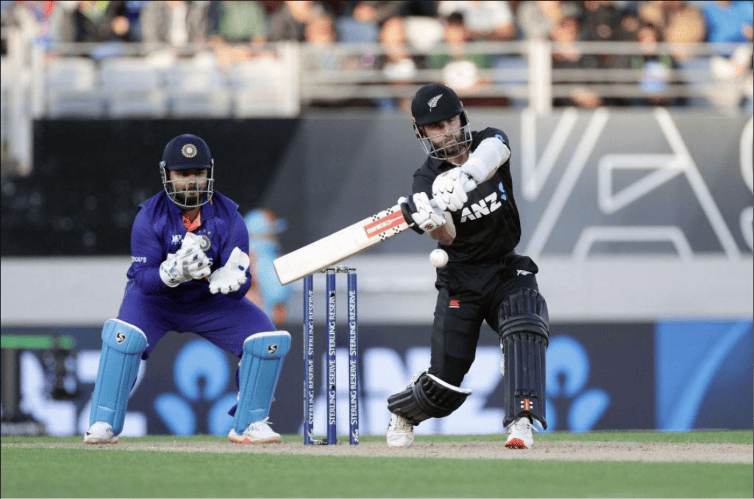
New Zealand needed a strong start. Playing at home, the hosts would have wanted to put a challenging total on the board. Unfortunately for them, India’s bowlers had different ideas.
The early stages of the innings were important. Will Young was dismissed for just nine runs, while Tim Seifert tried to provide some stability at the other end.
Seifert looked reasonably comfortable and scored 38 from 43 deliveries. His innings included three fours and two sixes. He was the top scorer for New Zealand, but he could not convert his start into a bigger score.
Henry Nicholls also struggled to settle. He managed nine runs before Arshdeep Singh removed him.
Then came a useful contribution from Daryl Mitchell. The experienced batter scored 28 from 41 balls. He attempted to rebuild the innings, but the Indian bowlers kept asking questions.
Tom Latham managed only three runs. Glenn Phillips followed with 30 from 51 deliveries. Phillips tried to hold the middle order together, but the required acceleration never really came.
New Zealand were losing wickets at the wrong time. Mitchell Santner scored four, Nathan Smith made one, and Kyle Jamieson also departed after scoring one run.
The situation was getting difficult.
Blair Tickner then provided some much-needed entertainment for the home supporters. He attacked the Indian bowlers and scored 34 runs from only 23 balls, including four sixes. Jacob Duffy remained unbeaten on 15.
Their late contributions helped New Zealand reach 185. Still, the total was below what the hosts would have hoped for.
The Indian bowling attack deserves credit. It never allowed New Zealand to settle for long.
New Zealand Full Batting Scorecard
| Batter | Runs | Balls |
|---|---|---|
| Will Young | 9 | 11 |
| Tim Seifert | 38 | 43 |
| Henry Nicholls | 9 | 11 |
| Daryl Mitchell | 28 | 41 |
| Tom Latham | 3 | 11 |
| Glenn Phillips | 30 | 51 |
| Mitchell Santner | 4 | 16 |
| Nathan Smith | 1 | 9 |
| Kyle Jamieson | 1 | 6 |
| Jacob Duffy | 15* | 21 |
| Blair Tickner | 34 | 23 |
| Extras | 13 | — |
| Total | 185 all out | 40.2 overs |
Arshdeep Singh and India’s Pace Attack Make the Difference
If New Zealand struggled with the bat, India’s fast bowlers were one of the main reasons.
Arshdeep Singh led the attack. He finished with four wickets for 70 runs in ten overs. His figures were not particularly economical, but his ability to break partnerships was extremely valuable.
He removed Will Young, Henry Nicholls, Glenn Phillips and Kyle Jamieson. These wickets prevented New Zealand from building a substantial total.
Gurnoor Brar also produced an impressive performance. He picked up three wickets for 44 runs in 9.2 overs. His contribution was particularly important because he dismissed key batters and helped India maintain control.
Then there was Anshul Kamboj.
Kamboj bowled ten overs and conceded only 22 runs. He picked up two wickets and delivered two maiden overs. That is the kind of spell every captain wants from a bowler.
His figures of 2/22 were among the best bowling performances of the innings. He restricted the scoring rate and kept pressure on the New Zealand middle and lower order.
Axar Patel also played his part, conceding just 12 runs in five overs. Auqib Nabi completed his six-over spell with 33 runs conceded.
India’s bowling performance was balanced. Some bowlers attacked the stumps and searched for wickets, while others concentrated on controlling the scoring rate.
That combination worked.
India Bowling Scorecard
| Bowler | Overs | Runs | Wickets |
|---|---|---|---|
| Arshdeep Singh | 10 | 70 | 4 |
| Auqib Nabi | 6 | 33 | 0 |
| Anshul Kamboj | 10 | 22 | 2 |
| Gurnoor Brar | 9.2 | 44 | 3 |
| Axar Patel | 5 | 12 | 0 |
Virat Kohli’s 74: The Turning Point of India’s Chase
Now let’s talk about the innings that grabbed everyone’s attention.
Virat Kohli walked out to bat after Rohit Sharma was dismissed for a duck. India had lost an early wicket, and the chase needed someone to take responsibility.
Kohli did exactly that.
He started with a positive approach. He looked comfortable against the New Zealand attack and found gaps in the field. His timing was excellent, and the boundaries kept coming.
Kohli scored 74 runs from 51 balls. He hit 13 fours and one six, finishing with a strike rate of 145.10.
It was an attacking innings, but it was also controlled. He did not simply swing at everything. Instead, he picked the right deliveries and punished loose bowling.
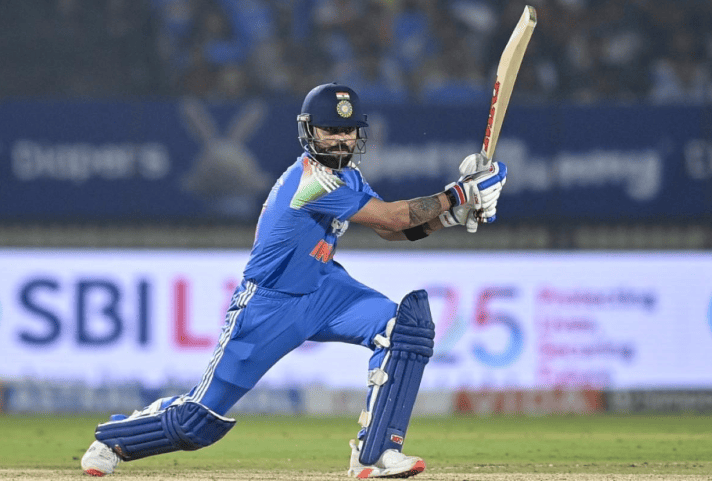
The innings was especially memorable because it came on the eve of his 38th birthday. He also completed his 80th ODI half-century.
For cricket fans, it was another reminder of his ability to perform in important situations.
Jacob Duffy eventually dismissed Kohli after his impressive knock. However, by that point, the damage had already been done. India were in a strong position.
Kohli’s performance was one of the biggest talking points in the match report and will naturally attract attention from fans searching for Virat Kohli’s latest ODI performance.
Shubman Gill Provides Valuable Support
Kohli was not alone.
India captain Shubman Gill played a significant role in the chase. After Rohit Sharma’s early dismissal, Gill joined Kohli and helped rebuild the innings.
He scored 37 runs from 56 balls, including five boundaries.
Gill did not play the same attacking role as Kohli. Instead, he focused on keeping the innings stable. He rotated the strike, defended the good deliveries and allowed Kohli to attack when the opportunity arrived.
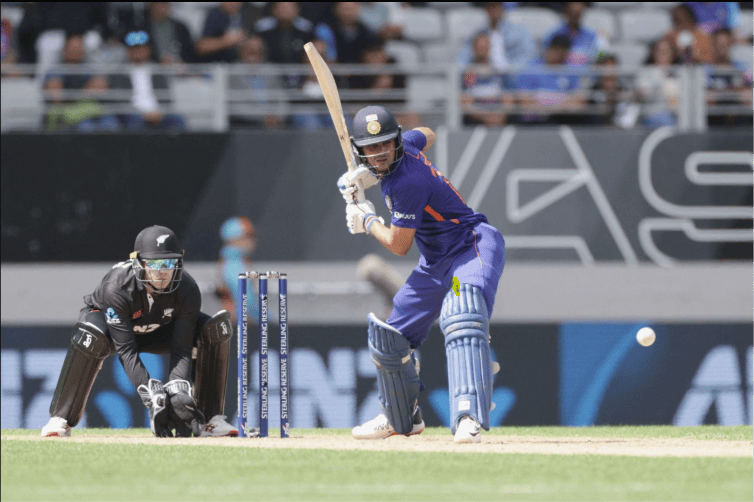
The pair built a 113-run partnership for the second wicket. That partnership was arguably the most important phase of India’s innings.
Think about the situation. India had lost an early wicket, rain was affecting the match, and the target had been revised. Yet the two batters remained composed.
Gill was eventually dismissed by Nathan Smith, while Kohli fell to Jacob Duffy.
Their partnership had already put India in a commanding position.
India’s Full Batting Scorecard
| Batter | Runs | Balls |
|---|---|---|
| Rohit Sharma | 0 | 6 |
| Shubman Gill | 37 | 56 |
| Virat Kohli | 74 | 51 |
| Shreyas Iyer | 15 | 13 |
| Axar Patel | 0 | 2 |
| KL Rahul | 3* | 5 |
| Naman Dhir | 5* | 3 |
| Extras | 9 | — |
| Total | 143/5 | 22.4 overs |
New Zealand Bowling Performance: Jacob Duffy Leads the Attack
New Zealand needed early wickets to put India under pressure. Kyle Jamieson delivered one by dismissing Rohit Sharma for a duck.
But the bigger challenge was stopping Kohli and Gill.
Jacob Duffy was New Zealand’s most successful bowler. He claimed three wickets for 49 runs in seven overs. He dismissed Kohli, Shreyas Iyer and Axar Patel.
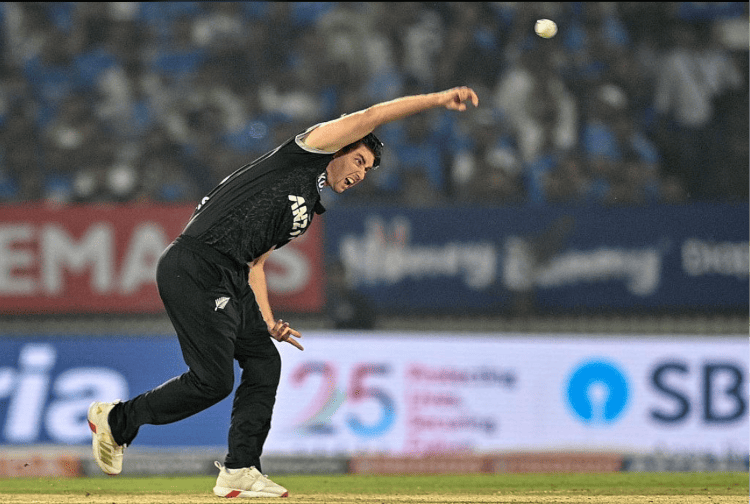
Nathan Smith picked up one wicket, removing Shubman Gill after his useful contribution.
Blair Tickner bowled four overs and conceded 38 runs without taking a wicket. Kyle Jamieson finished with one wicket for 34 runs.
The New Zealand bowlers had their moments. However, they could not break the Kohli-Gill partnership early enough.
Once those two batters settled, the pressure shifted towards the home side.
New Zealand Bowling Scorecard
| Bowler | Overs | Runs | Wickets |
|---|---|---|---|
| Kyle Jamieson | 7 | 34 | 1 |
| Jacob Duffy | 7 | 49 | 3 |
| Blair Tickner | 4 | 38 | 0 |
| Nathan Smith | 4.4 | 21 | 1 |
Rain Interruption and the DLS Method: Why Was India’s Target Revised?
Rain was one of the biggest factors in this first ODI.
The weather interrupted India’s chase, reducing the available playing time. As a result, the officials used the Duckworth-Lewis-Stern method to calculate a revised target.
India were set a target of 143 runs in 32 overs.
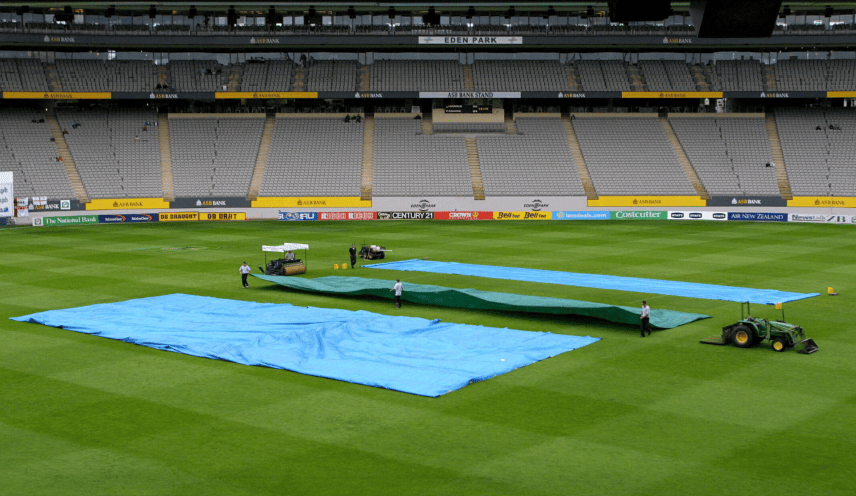
For readers unfamiliar with the DLS method, it is a mathematical system used in limited-overs cricket when rain or other interruptions reduce the number of overs available.
It considers the resources available to each team, including wickets remaining and overs left. The purpose is to produce a revised target that reflects the changed conditions.
In this match, the revised target gave India a clear objective. They needed 143 runs within 32 overs.
The visitors handled the situation well. Kohli and Gill built the foundation, while the remaining batters helped finish the chase.
India reached 143/5 in 22.4 overs. They had five wickets remaining when Naman Dhir hit the winning boundary.
It was a comfortable finish in the end, despite the interruptions.
Anshul Kamboj Named Player of the Match
There was plenty of attention on Virat Kohli after his 74, and rightly so. But the Player of the Match award went to Anshul Kamboj.
His figures were impressive: two wickets for just 22 runs in ten overs.
He also bowled two maiden overs. That made his spell particularly valuable in an innings where New Zealand were trying to recover after losing early wickets.
Kamboj did not give the batters many opportunities to score freely. He maintained discipline and supported the wicket-taking efforts of Arshdeep Singh and Gurnoor Brar.

His performance shows why economical bowling matters so much in ODI cricket.
Taking wickets is important. But controlling the opposition’s scoring rate can be equally decisive.
Kamboj delivered both control and breakthroughs. It was a deserved Player of the Match performance.
Five Major Turning Points in the Match
There were several important moments in this contest. Some changed the momentum, while others helped India strengthen their position.
1. India’s Early Breakthroughs
New Zealand lost important wickets during the first innings. Will Young and Henry Nicholls were dismissed early, preventing the hosts from building a strong opening partnership.
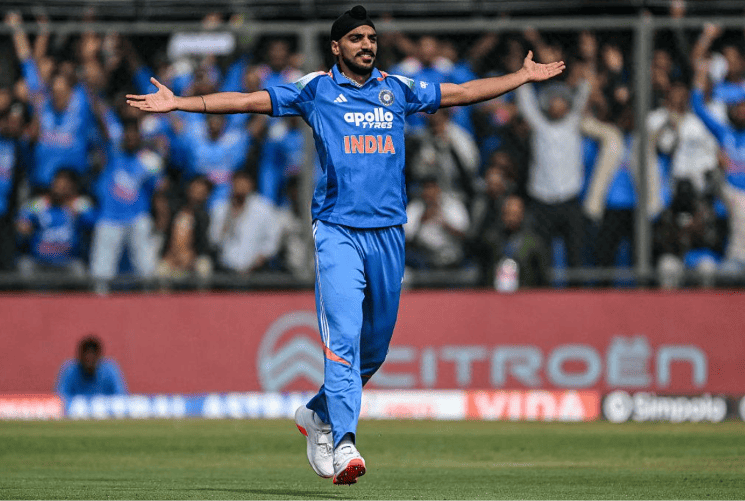
2. Arshdeep Singh’s Four Wickets
Arshdeep’s four-wicket performance was crucial. He removed important batters and ensured that New Zealand could not build a substantial total.
3. Blair Tickner’s Late Counterattack
Tickner’s 34 from 23 balls gave New Zealand some momentum towards the end. His four sixes provided entertainment, but the late effort could not take the total beyond 185.
4. The 113-Run Partnership
Kohli and Gill completely changed the direction of India’s chase. Their second-wicket partnership helped the visitors recover from the early loss of Rohit Sharma.
5. India’s Calm Finish
Even after losing Kohli and a few more wickets, India did not panic. KL Rahul and Naman Dhir remained at the crease, and Naman struck the winning boundary.
What Went Wrong for New Zealand?
New Zealand will have several things to think about before the next match.
The biggest problem was the lack of substantial partnerships. Tim Seifert, Daryl Mitchell and Glenn Phillips made useful contributions, but none could convert their start into a major innings.
The middle order also struggled against India’s pace attack. Regular wickets meant that New Zealand never really gained control.
The bowling unit had a similar problem. Jacob Duffy took three wickets, but the partnership between Kohli and Gill had already put India in a strong position.
New Zealand need better batting partnerships and more consistent bowling in the next game.
They are playing at home, and the team will want to make the most of that advantage.
What Went Right for India?
India’s biggest strength was the balance between their bowling and batting performances.
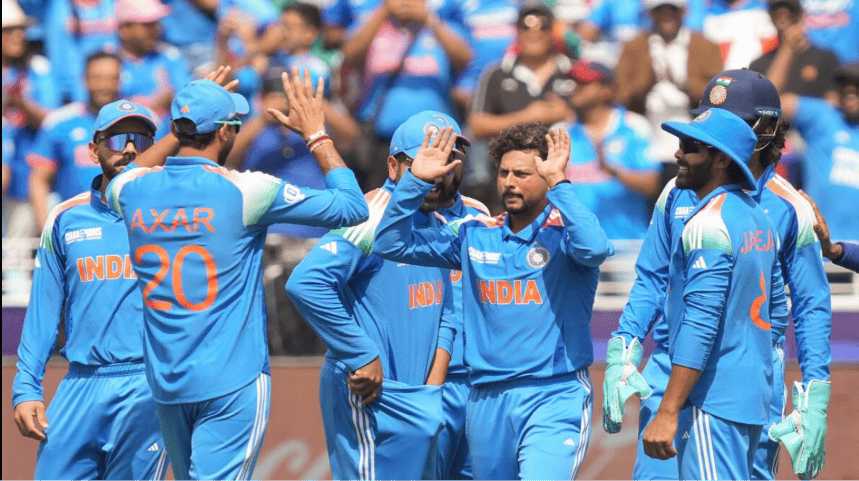
The fast bowlers took nine wickets between them. Anshul Kamboj controlled the scoring rate, Arshdeep Singh provided breakthroughs, and Gurnoor Brar supported the attack with three wickets.
Then came the batting response.
Kohli played the leading role, Gill provided stability, and the lower order completed the job.
India also adapted well to the rain interruption and revised target. That was important because chasing in a shortened game can create additional pressure.
The result was a strong opening performance from the visitors.
India vs New Zealand ODI Series 2026: What Happens Next?
In New Zealand vs India, India now lead the five-match ODI series 1-0.
The next match is scheduled for November 7, 2026, at Hnry Stadium in Wellington.
New Zealand will be eager to bounce back. Their batting lineup needs to spend more time at the crease, while the bowlers must find ways to break partnerships earlier.
India, meanwhile, will look to continue the momentum from Auckland.
Virat Kohli’s form will be one of the major talking points. Shubman Gill also looked composed, and India’s pace attack has given the team a strong start.
But one match does not decide an entire series.
New Zealand have enough quality to make the remaining games competitive. The second ODI should provide another interesting contest between these two international sides.
Frequently Asked Questions (FAQs)
1. Who won the New Zealand vs India 1st ODI 2026?
India won the first ODI by five wickets under the DLS method at Eden Park, Auckland, on November 4, 2026.
2. What was New Zealand’s score in the first ODI?
New Zealand scored 185 runs and were bowled out in 40.2 overs.
3. What was India’s score against New Zealand?
India scored 143/5 in 22.4 overs while chasing the revised target of 143 runs.
4. How many runs did Virat Kohli score?
Virat Kohli scored 74 runs from 51 balls, including 13 fours and one six.
5. How many wickets did Arshdeep Singh take?
Arshdeep Singh took four wickets for 70 runs in his ten overs.
6. Who was the Player of the Match?
Anshul Kamboj was named Player of the Match of New Zealand vs India for taking two wickets for 22 runs in ten overs.
7. How many runs did Shubman Gill score?
Shubman Gill scored 37 runs from 56 deliveries, including five fours.
8. Where was the first ODI played?
The match was played at Eden Park, Auckland, New Zealand.
9. Why was the DLS method used?
Rain interrupted the New Zealand vs India match and reduced the available playing time. The DLS method was used to revise India’s target to 143 runs in 32 overs.
10. What is the series score after the first ODI?
India lead the five-match ODI series 1-0 after winning the opening match.
11. Who scored the most runs for New Zealand?
Tim Seifert was New Zealand’s highest scorer with 38 runs from 43 balls.
12. How many wickets did Jacob Duffy take?
Jacob Duffy claimed three wickets for 49 runs in seven overs.
Conclusion
India could hardly have asked for a better start to their ODI campaign in New Zealand.
The bowling attack restricted the hosts to 185 runs. Then Virat Kohli took charge of the chase with a brilliant 74, while Shubman Gill provided valuable support with 37.
The contributions from Arshdeep Singh, Gurnoor Brar and Anshul Kamboj were equally important. It was a proper team performance, not just an individual show.
For New Zealand, the first ODI exposed some weaknesses in both batting and bowling. The hosts will need to respond quickly if they want to level the series.
The New Zealand vs India opening match has certainly given cricket fans plenty to discuss. Kohli’s innings, India’s pace attack and the impact of rain made this an interesting start to the five-match contest.
Now the focus moves to Wellington. Can New Zealand bounce back, or will India extend their lead?
We will find out in the second ODI.
Stay connected with everythingaboutcricket.online for more cricket match reports, ODI updates, international cricket news, player performances, scorecards and detailed match analysis.
READ ALSO
IND vs NZ 5th T20 Highlights 2026: New Zealand Beat India by 7 Wickets in Thrilling Match –
3 Responses